Attic Ventilation 101: The Hidden Reason Your Roof Fails Early
If your roof is wearing out faster than it should, the problem might not be the roof. It might be the attic underneath.
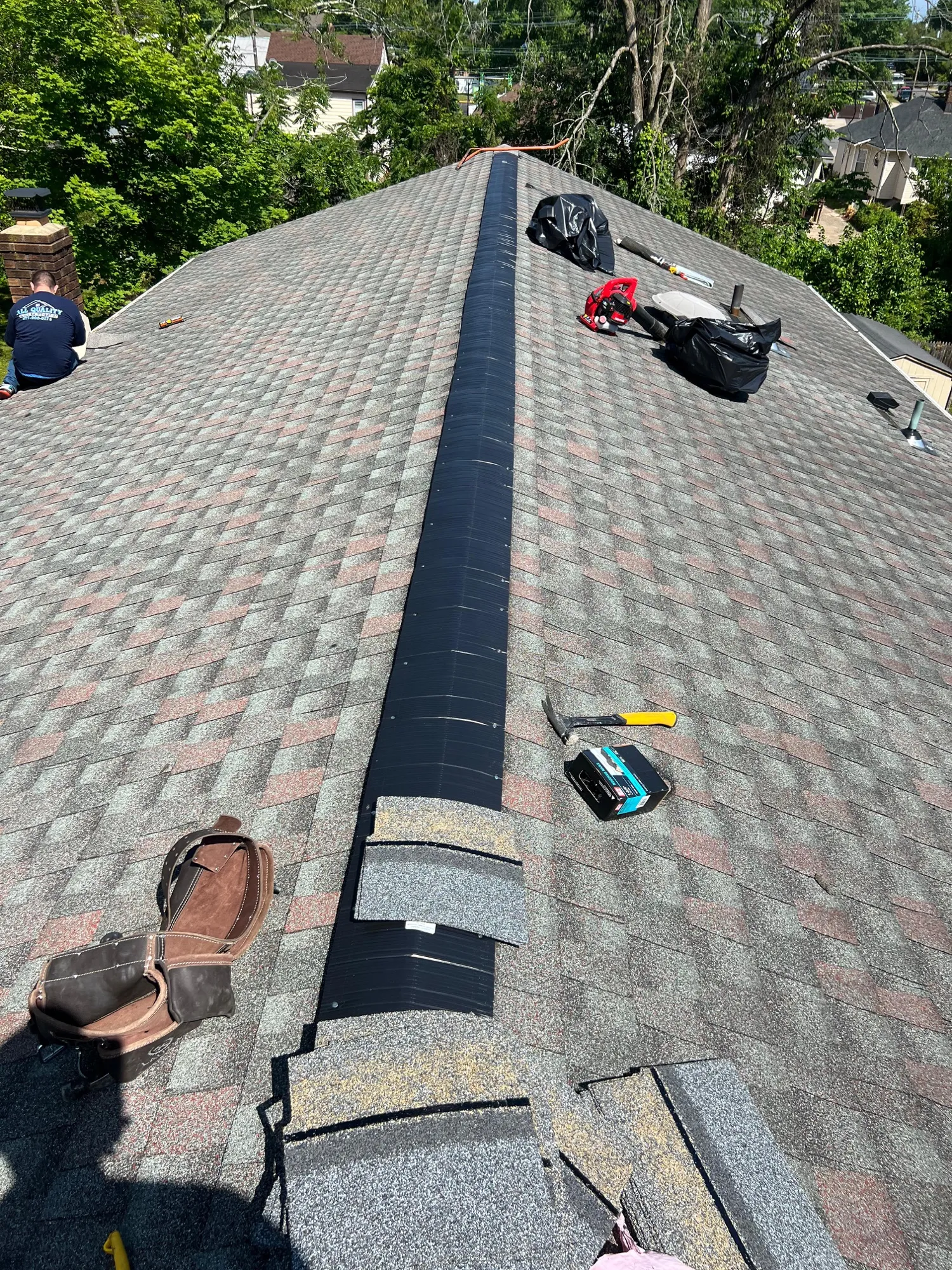
When we tear off an old asphalt roof that should have lasted 30 years and finds it failing at 18, the cause is almost always one of two things: bad installation, or bad attic ventilation.
Bad installation we can spot immediately. Bad ventilation is invisible from the outside, which is why so many homeowners miss it — and why so many roofs fail early.
Here’s what’s happening in your attic and why it matters.
What attic ventilation actually does
The job of attic ventilation is simple: keep the air in your attic the same temperature as the air outside.
In summer, that means letting hot air escape so it doesn’t bake the underside of your roof.
In winter, that means keeping the attic cold enough that snow on the roof stays frozen — which prevents ice dams.
Year-round, ventilation lets moisture (from cooking, bathing, and air leaks from below) escape before it condenses on the cold roof structure.
When ventilation works, your attic temperature tracks the outside temperature within a few degrees.
When ventilation fails, your attic becomes a humid greenhouse in summer and a humid icebox in winter — and the conditions destroy your roof from the underside.
How bad ventilation kills shingles
Summer
On a hot July afternoon, an unventilated NJ attic can hit 150°F or more. That heat radiates up into the underside of your asphalt shingles. The shingles soften, the asphalt loses its plasticizers, and the granules start to release.
Over years, shingles in a hot attic can lose 5–10 years of lifespan compared to identical shingles over a properly ventilated attic.
Winter
Heat from your living space leaks up into the attic. If there’s no ventilation to flush it out, that heat warms the underside of the roof. The snow on top melts. The meltwater runs to the cold eaves and refreezes — forming ice dams that back up under the shingles and into your house.
Year-round
Moisture from inside the house (cooking, showers, laundry) rises into the attic. Without ventilation, that moisture condenses on the cold roof structure. Over years, the condensation rots the decking and the rafters.
How to tell if your attic ventilation is bad
Outside signs
- Premature shingle wear (especially on south-facing slopes)
- Curling shingles before age 15
- Ice dams in winter
- Mold growth on shingles
- Wavy or sagging roofline (decking damage from below)
Inside attic signs
- Rusty nails sticking through the underside of the decking (condensation)
- Visible mold or staining on rafters or decking
- Damp insulation
- Dripping in winter
- Frost on the underside of the decking in cold weather
- Insulation pushed away from the eaves (blocking airflow)
Bills
- High summer cooling costs
- High winter heating costs
- These together suggest your attic isn’t acting as the buffer it should
What good ventilation looks like
A properly ventilated attic has two things:
1. Intake vents at the eaves (soffit vents)
These bring cold outside air into the attic from below. Modern soffit vents are continuous strips along the underside of the roof overhang.
2. Exhaust vents at or near the ridge
These let warm air escape at the top of the attic. The most effective is a continuous ridge vent that runs along the peak of the roof. Older homes might use gable vents or roof-mounted box vents.
The ratio matters. Most building codes require 1 square foot of net free vent area for every 150 square feet of attic floor — half intake, half exhaust.
Why “more vents” isn’t always the answer
Adding random vents to an attic doesn’t fix ventilation. The intake and exhaust have to work together. If you have ridge vents but blocked soffit vents, the ridge vents pull air out of the upper attic and from the gable vents, instead of from the eaves — which means the lower part of the attic doesn’t get fresh air at all.
Similarly, if you have soffit vents but no exhaust at the ridge, the warm air just sits at the top of the attic.
This is why ventilation needs to be designed as a system, not added piece by piece.
Common ventilation problems we find
Insulation blocking soffit vents
The most common issue. Homeowners or insulation contractors push fiberglass batts all the way to the eaves, blocking the airflow from the soffit vents into the attic. Easy fix: install baffles to keep the airflow path clear.
No soffit vents at all
Some older homes have closed soffits. Adding new vents during a roof replacement is straightforward.
Ridge vent installed but not opened
This is shockingly common. The contractor installed a ridge vent but never cut the slot in the decking underneath, so air can’t actually escape through it. We’ve seen this on a third of the roofs we inspect.
Mixed vent types
Combining ridge vents with gable vents or box vents short-circuits the airflow. The system pulls air from the easiest opening, not from the soffits where it should.
Power-vent fans installed in place of passive ventilation
Sometimes a contractor installs a powered exhaust fan because it’s easier than fixing the soffit vents. These work but consume electricity, have moving parts that fail, and can actually depressurize the attic in ways that pull conditioned air out of the house through ceiling penetrations.
What to do if you suspect a ventilation problem
The good news: ventilation issues are often fixable without replacing the roof. We can usually:
- Open up blocked soffit vents
- Add baffles to maintain airflow
- Install or repair ridge venting
- Add new soffit vents where there are none
- Remove conflicting vents (gable, box) and switch to a unified ridge system
The cost is much less than a roof replacement and often extends the life of your existing roof by years.
If you’re already getting a roof replaced, this is the perfect time to address ventilation. We always inspect the attic and address any issues during a re-roof.