How to Choose a Roofing Contractor in NJ (10 Questions to Ask)
Hiring a roofer is one of the largest home decisions you'll make. Here are the ten questions that separate trustworthy contractors from the ones who'll leave you with a mess.
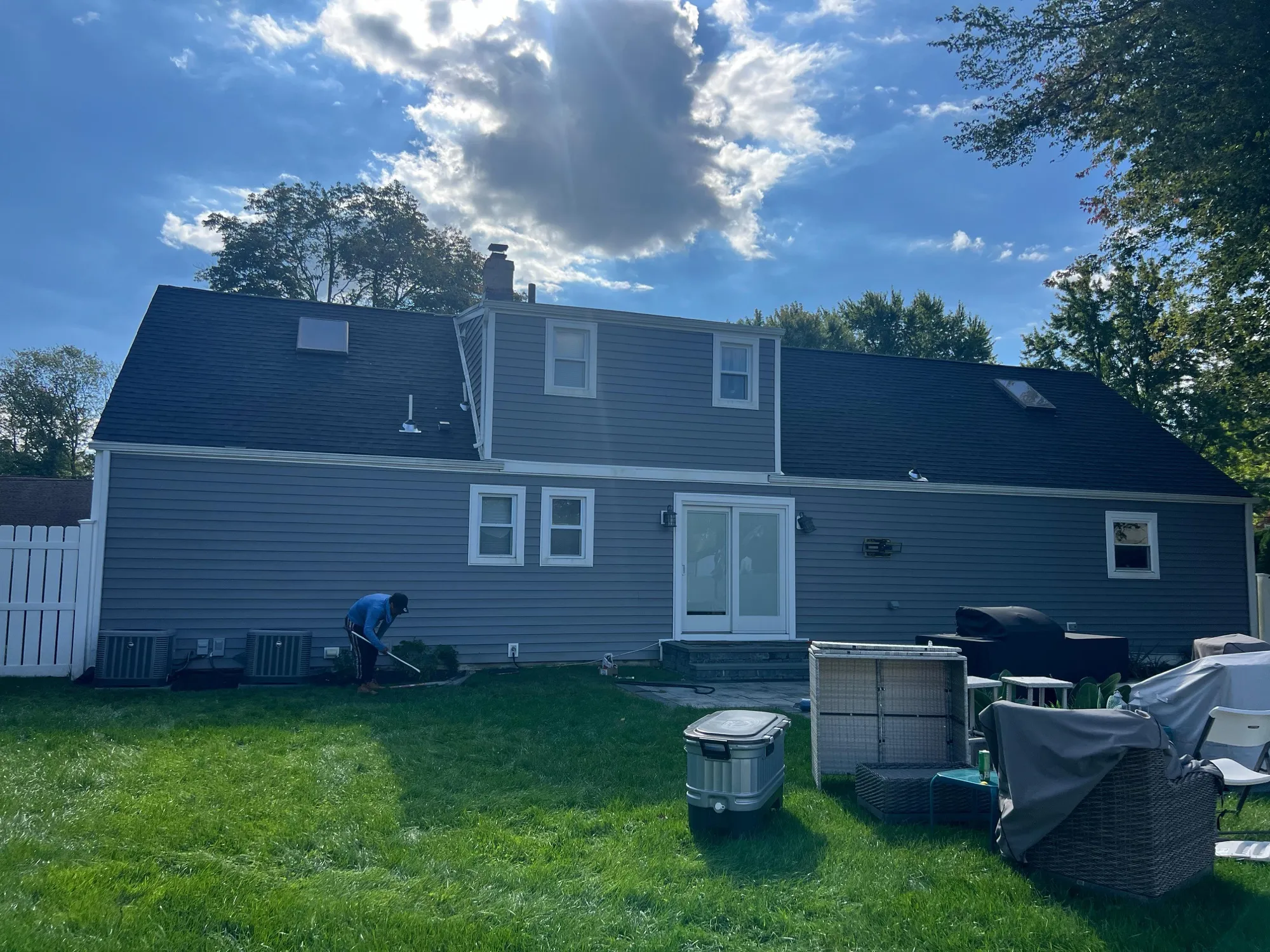
A roof replacement is one of the largest home improvement decisions a homeowner makes. It’s expensive, it affects every other part of your home, and if it’s done wrong, the consequences are nasty: leaks, insurance claim denials, voided warranties, and sometimes structural damage.
After 20+ years in the business, here are the ten questions we recommend every homeowner ask before signing a contract with any roofer — including us.
1. Are you licensed and insured in New Jersey?
This is the absolute baseline. New Jersey requires a Home Improvement Contractor (HIC) registration for most exterior work. Ask for the license number and look it up. Then ask about general liability insurance and workers’ compensation. If a contractor can’t show you proof of both, walk away. If a worker is injured on your property and they’re not insured, the liability could land on you.
2. How long have you been in business?
There are no shortcuts here. A contractor who’s been around for 15-20+ years has weathered storms (literally), built a reputation, and proven they show up year after year. A brand-new operation isn’t necessarily bad — but they have less of a track record to verify.
3. Do you use subcontractors or your own crew?
Subcontracting isn’t always a problem, but it adds an extra layer between you and the people doing the work. Ask: who is going to be on my roof? Are they your employees, or are they showing up from another company you don’t directly manage? An in-house crew almost always means better quality control.
4. What is your warranty — and is it in writing?
Manufacturer warranties on shingles are one thing. Workmanship warranties from the contractor are another. Ask for both, in writing, and read them. A good contractor offers a long workmanship warranty (we offer a lifetime craftsmanship guarantee). A bad one will hand you a one-year warranty with so many exclusions it’s effectively meaningless.
5. Do you tear off the old roof or layer over it?
Some contractors offer to “save money” by installing new shingles directly over your old ones. This is a red flag. Layering hides decking damage, voids most manufacturer warranties, adds significant weight to your structure, and shortens the lifespan of the new roof. A reputable contractor will always recommend a complete tear-off.
6. Will you replace damaged decking?
When the old shingles come off, the contractor should inspect the plywood decking underneath. If any of it is rotted or weakened, it needs to be replaced before new underlayment goes down. Ask in advance: if you find bad decking, what does it cost to replace, and how do you handle that mid-project? A good answer is a clear per-sheet price you agree to upfront.
7. What underlayment and ice & water shield do you use?
This is a “tell me about your process” question. A pro will know exactly what they install — synthetic underlayment, ice and water shield at the eaves and valleys, drip edge at the perimeter. A novice or shortcut artist will fumble or wave it off. The underlayment is the second line of defense against leaks. Don’t let anyone skimp on it.
8. Who handles cleanup, and what does it look like?
Roofing is messy. Old shingles, nails, wrappers, and debris end up everywhere. A professional crew brings a magnetic roller for nails, tarps the surrounding ground, and does daily cleanup. Ask explicitly: how do you protect my landscaping, and what does the property look like when you leave each day?
9. Can I see references — and recent local work?
Any reputable contractor should be able to share recent project addresses (with permission) and references from satisfied customers. Even better: drive by a completed job and look at it. Walk the perimeter. Ask the homeowner if they were happy. This takes 30 minutes and can save you tens of thousands of dollars in regret.
10. Do you provide a written, itemized contract?
Never accept a verbal quote or a one-line “total price” estimate. A real contract shows exactly what you’re paying for: materials, labor, tear-off, disposal, decking replacement, warranty terms, payment schedule, start date, expected completion date. If a contractor resists writing things down, that’s your answer about how the rest of the project will go.
A bonus question we always wish people would ask
“Will you tell me if you find something I don’t actually need?”
The roofing industry has a reputation for upselling. Some companies push replacements when repairs would do, push premium products when standard ones would last 25 years, and add line items that benefit them more than the homeowner.
A contractor who’ll talk you out of work you don’t need is a contractor you can trust to do work you do need. Ask the question, and pay attention to how they answer.
The bottom line
You’re not just hiring a service — you’re inviting a crew onto the most expensive part of your house. The cheapest quote is rarely the best deal, and the most expensive isn’t always the best either. The best deal is the contractor who answers all ten of these questions clearly, in writing, with proof.
Take your time. Get three quotes. Ask the questions. The right roofer will appreciate that you did your homework — and the wrong one will reveal themselves before you sign anything.