Ice Dams in New Jersey: Why They Happen and How to Stop Them
Ice dams cause more winter roof damage in NJ than almost anything else. Here's what causes them, how to prevent them, and what to do if you already have one.
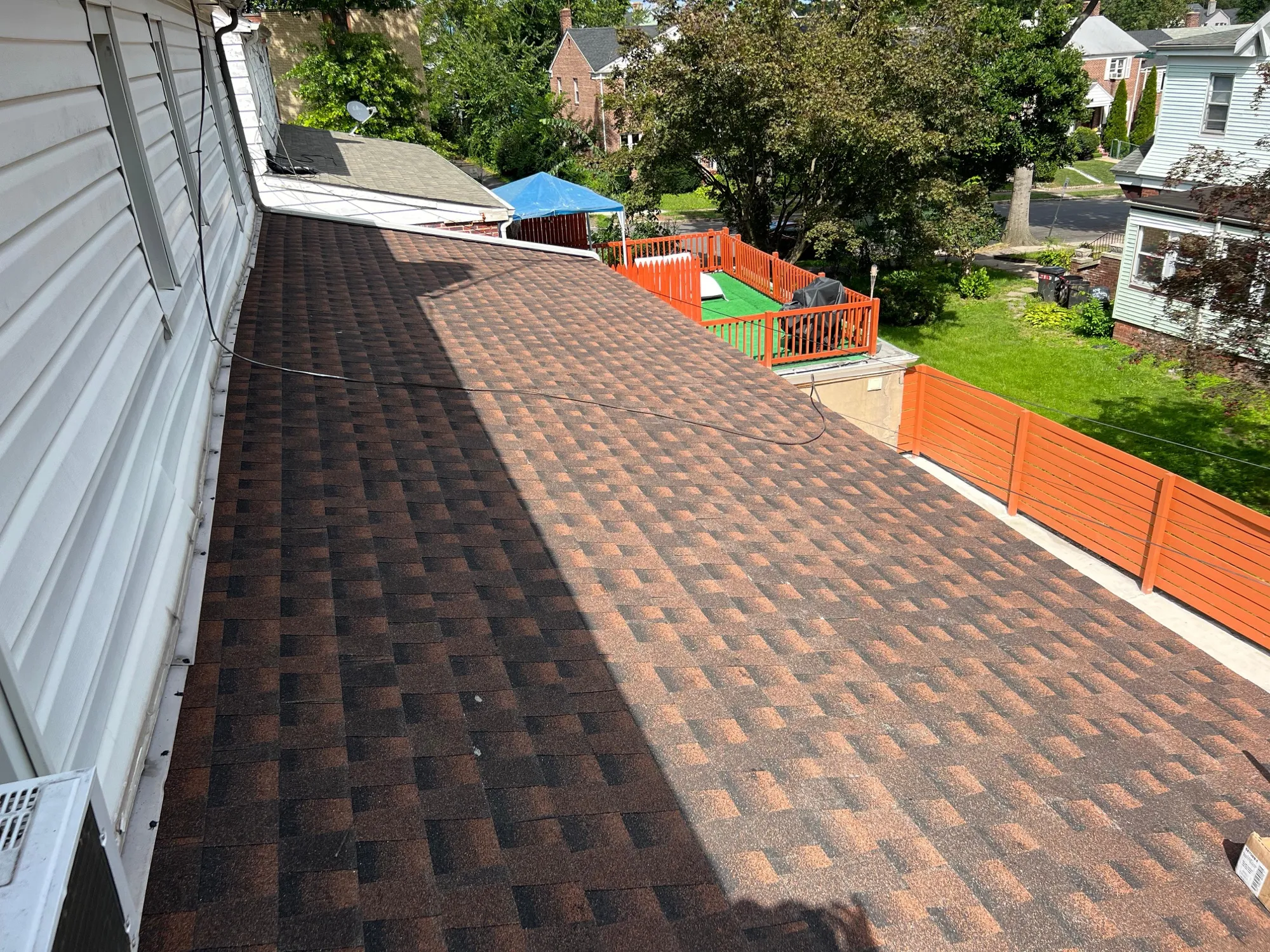
If you’ve ever seen a thick ridge of ice along the bottom edge of a roof in February, you’ve seen an ice dam. They’re a uniquely frustrating winter problem because by the time you notice one, the damage inside your home may already be done.
Here’s what’s actually happening, why it’s a New Jersey specialty, and the only ways to actually prevent it.
What is an ice dam?
An ice dam is a wall of ice that forms along the bottom edge (eaves) of your roof. It happens like this:
- Snow accumulates on your roof
- Heat escaping from your attic warms the upper parts of the roof
- The warmed snow melts and runs down the slope as water
- When the water reaches the eaves (which are colder because they overhang the wall), it refreezes
- The refrozen ice builds up over many cycles, forming a dam
- Subsequent meltwater pools behind the dam — sometimes a foot deep
- That standing water finds its way under the shingles
- The water leaks into the attic, walls, and ceilings below
The damage isn’t from the ice itself. It’s from the water that can’t drain because the ice is blocking it.
Why New Jersey is ice-dam country
Three things have to happen for an ice dam to form:
- Snow on the roof
- A warm attic (above 32°F)
- A cold roof edge (below 32°F)
New Jersey winters give us all three regularly:
- We get enough snow to accumulate (usually multiple events per winter)
- Many older NJ homes have inadequate attic insulation, so heat escapes upward
- Our temperatures hover around freezing, perfect for the freeze-thaw cycle
Northern states get colder, but their attics are usually better insulated and the snow stays frozen continuously. Southern states don’t get enough snow to matter. We’re in the sweet spot.
How to actually prevent ice dams
The myth: scraping snow off your roof or installing heat cables.
The reality: those are band-aids. The only permanent fix is to make sure your attic stays cold.
1. Better attic insulation
This is the single biggest factor. Most NJ homes built before 1990 have insulation rated R-19 or worse. Modern building codes call for R-49 or higher in our climate zone. Adding insulation is one of the highest-ROI home improvements you can make — it prevents ice dams and lowers your heating bill.
2. Better attic ventilation
Cold outside air needs to flow through the attic to keep it the same temperature as outside. This means:
- Soffit vents along the eaves (intake)
- Ridge vent or gable vents (exhaust)
- Insulation that doesn’t block the soffit vents
- Baffles to keep insulation out of the airflow path
If your attic is hot in winter and the snow is melting on your roof while the neighbor’s stays frozen, your ventilation needs work.
3. Air sealing
Even with good insulation, gaps and penetrations let warm air leak into the attic. Recessed lights, plumbing penetrations, and the attic hatch are common culprits. Air sealing these makes a big difference.
4. Ice & water shield at the eaves
This is what we do as the roofer. When we install or replace a roof, we run a self-adhering rubberized membrane (called ice & water shield) along the eaves and valleys. If an ice dam does form and water gets under the shingles, this membrane prevents the leak from reaching the decking.
NJ building code requires it, and good contractors install it generously. Cheap contractors install the minimum strip and skip valleys.
What to do if you already have an ice dam
If you’re seeing one this winter, there are a few short-term fixes — but be careful, because most ice dam fixes are dangerous:
Safe options
- Use a roof rake from the ground to remove snow from the bottom 4 feet of the roof. This eliminates the fuel for the ice dam.
- Place calcium chloride ice melt in a tube sock or stocking and lay it across the dam. It’ll slowly melt a channel through the ice for water to drain.
Dangerous, do not attempt
- Climbing on a snowy or icy roof — people die every year doing this
- Hacking the ice off with an axe or shovel — damages the shingles permanently
- Using a torch or heat gun on the ice — fire risk
- Pressure washing in below-freezing temperatures — destroys shingles and water freezes everywhere
Call a professional
For severe ice dams, professional removal services use steam (not heat or chisels) to safely melt the ice without damaging the roof. We can recommend trusted local services if you need one.
The long-term fix
If you’ve had ice dams more than once, the underlying problem is your attic, not your roof. We work with insulation contractors regularly because so many ice dam calls are really insulation calls in disguise.
When we do a roof replacement, we always check the attic. If insulation or ventilation issues are part of the picture, we tell you — and we recommend addressing them before installing the new roof, because a new roof on a poorly insulated attic will still get ice dams.