Why a $300 Chimney Cap Can Save You $5,000 in Repairs
Of all the cheap roofing upgrades we recommend, a chimney cap might have the best ROI. Here's why.
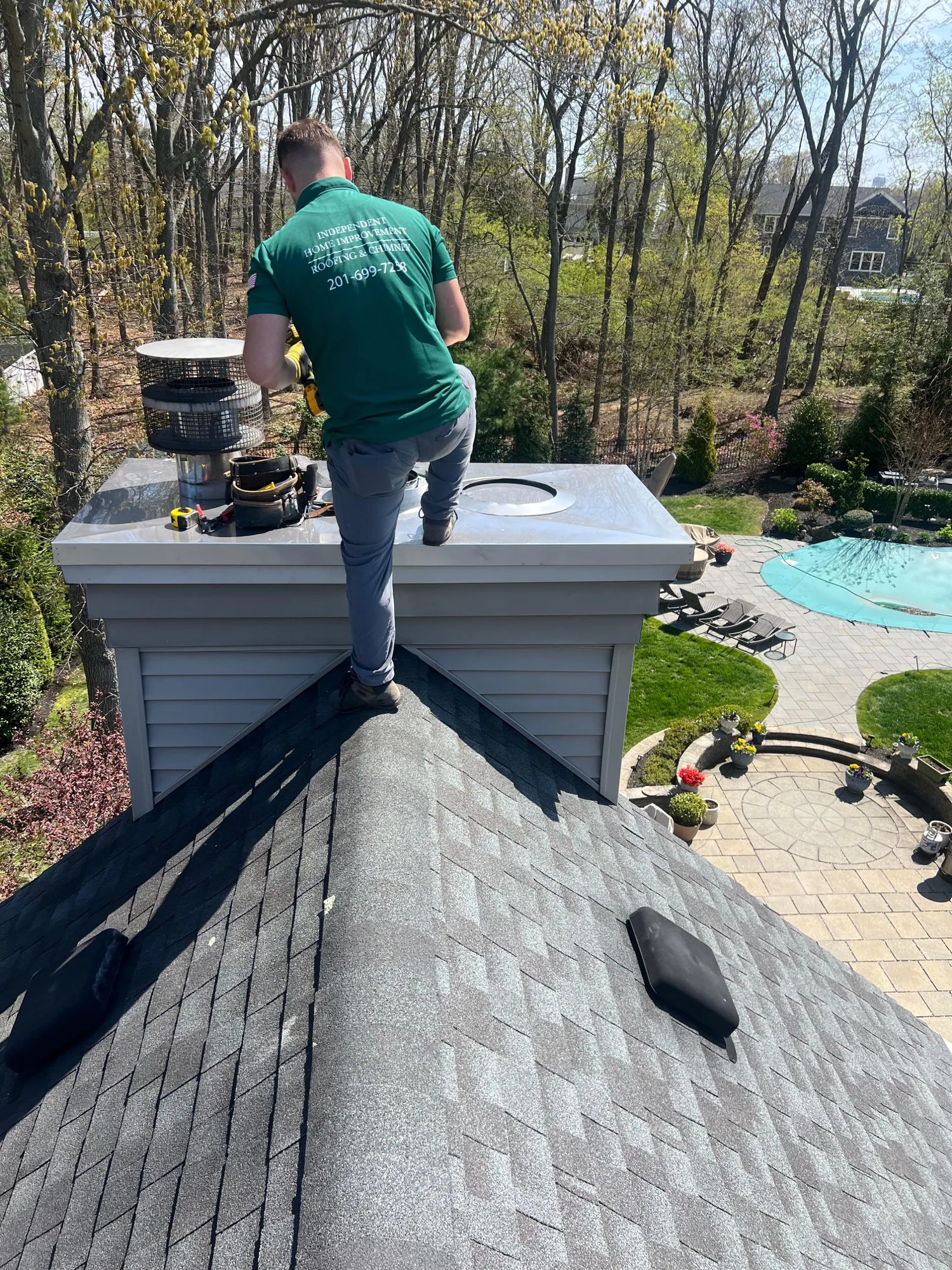
A chimney cap is a small piece of metal that sits on top of your chimney flue. It costs a few hundred dollars installed. It’s barely visible from the ground.
It’s also one of the highest-ROI roofing accessories you can buy. Here’s why.
What a chimney cap does
The cap covers the opening of the flue at the top of the chimney. It does four things:
- Keeps rain and snow out of the flue
- Keeps animals from nesting inside
- Stops debris from clogging the flue
- Prevents downdrafts and back-puffing of smoke
Without a cap, your chimney is essentially a vertical tube that funnels rain, snow, leaves, and curious squirrels straight into the heart of your house.
The damage a missing cap causes
Water damage to the chimney structure
Rain that goes into the flue saturates the inside of the chimney. The water seeps into the surrounding masonry, freezes during winter, expands, and breaks the bricks apart from inside. This is how spalling chimneys start — and how a small problem becomes a $5,000+ rebuild.
Damage to the firebox and damper
Water that reaches the bottom of the flue rusts the metal damper, deteriorates the firebox, and stains the hearth. Replacing a damper costs $300–$800. Major firebox repair runs $1,500–$3,500.
Animal nests
Birds, squirrels, raccoons, and bats love uncapped chimneys. We’ve removed nests that had been built up for years — and the cleanup is unpleasant. Nest removal costs $300–$600. The damage they caused (chewed wiring, contaminated insulation, blocked flues) can be much more.
Blocked flues from debris
Leaves, twigs, and animal nests can fully block the flue. If you light a fire with a blocked flue, smoke (and carbon monoxide) backs up into the house. This is dangerous and immediate.
Indoor smoke and odors
Even without a full blockage, an uncapped chimney downdrafts in certain wind conditions, pushing smoke and old fireplace odors into the living room. A cap with a wind guard prevents this.
Mold and mildew inside
Chronic moisture in the chimney creates the perfect environment for mold to grow on the masonry and inside the smoke chamber. The mold smells, releases spores into your house, and is expensive to remediate.
What kind of cap to get
Materials
- Stainless steel — the right answer for almost everyone. Lasts 20+ years, won’t rust, looks clean.
- Copper — premium choice for high-end homes. Develops a beautiful patina. Lasts 50+ years.
- Galvanized steel — cheap, rusts in 5–10 years. Skip it.
- Aluminum — lightweight, OK for short term, deteriorates faster than stainless.
Sizes
Caps need to fit the specific dimensions of your flue. A loose-fitting or too-small cap will be ineffective or blow off. We measure the flue and order the right size — there’s no “one size fits all.”
Single-flue vs multi-flue
Some chimneys have one flue. Others have two or three side-by-side. Multi-flue caps cover the entire top of the chimney as a single unit, which often looks better and provides more protection.
Animal screens
Most caps come with an integrated mesh screen. Make sure yours does — it’s the part that keeps animals out.
Wind guards
Some caps include vertical baffles that prevent downdrafts in windy conditions. Worth it if your house is exposed to prevailing winds or you’ve had downdraft problems.
Cost breakdown
For a typical NJ residential chimney:
| Type | Material cost | Total installed |
|---|---|---|
| Basic galvanized cap | $30 – $80 | $200 – $350 |
| Stainless steel cap | $60 – $150 | $250 – $400 |
| Premium stainless multi-flue | $150 – $400 | $400 – $700 |
| Copper cap | $300 – $800 | $600 – $1,200 |
For most homeowners, stainless steel installed by a professional is around $300. It lasts 20+ years. And it prevents potentially thousands of dollars in damage.
That’s the math behind the title of this post. It’s not hypothetical — we’ve seen it play out on dozens of houses in our service area.
When to replace an existing cap
Even good caps eventually need replacement. Look for:
- Visible rust (galvanized only)
- Loose or missing screws
- Bent or dented metal
- Holes in the mesh screen
- Cap visibly tilted or no longer level
- Animal damage (caps can be pried off by raccoons)
If your cap is over 15 years old or visibly degraded, plan to replace it during your next roof inspection.
The other thing while you’re up there
A chimney cap is part of a larger system that protects your chimney. While you’re having a cap installed, also have someone check:
- The crown (concrete cap below the chimney top)
- The flashing where the chimney meets the roof
- The mortar joints in the upper bricks
- Any visible signs of staining or efflorescence
These are the four most failure-prone parts of a chimney. Catching small issues with any of them is the difference between a $400 repair and a $4,000+ rebuild.
The bottom line
A chimney cap is one of the cheapest pieces of metal you’ll ever buy for your house. It also has one of the highest cost-to-benefit ratios of anything we install. If your chimney doesn’t have a cap, or has a worn-out one, replacing it is one of the easiest decisions in home maintenance.